My blog has moved from Blogger to my own domain.
The Naturography Blog can now be found at http://naturography.com
This blog post can now be found at http://naturography.com/red-tailed-hawk-photo-shoot-walkthrough/
Thank you for your interest.
Showing posts with label nature photography. Show all posts
Showing posts with label nature photography. Show all posts
Sunday, November 22, 2009


Sunday, November 8, 2009
Infinite Possibilities, Part 5
My blog has moved from Blogger to my own domain.
The Naturography Blog can now be found at http://naturography.com
This blog post can now be found at http://naturography.com/infinite-possibilities-part-5/
Thank you for your interest.
The Naturography Blog can now be found at http://naturography.com
This blog post can now be found at http://naturography.com/infinite-possibilities-part-5/
Thank you for your interest.
Thursday, November 5, 2009
Infinite Possibilities, Part 4
My blog has moved from Blogger to my own domain.
The Naturography Blog can now be found at http://naturography.com
This blog post can now be found at http://naturography.com/infinite-possibilities-part-4/
Thank you for your interest.
The Naturography Blog can now be found at http://naturography.com
This blog post can now be found at http://naturography.com/infinite-possibilities-part-4/
Thank you for your interest.
Friday, October 30, 2009
Infinite Possibilities, Part 2
My blog has moved from Blogger to my own domain.
The Naturography Blog can now be found at http://naturography.com
This blog post can now be found at http://naturography.com/infinite-possibilities-part-2/
Thank you for your interest.
The Naturography Blog can now be found at http://naturography.com
This blog post can now be found at http://naturography.com/infinite-possibilities-part-2/
Thank you for your interest.
Wednesday, October 28, 2009
Infinite Possibilities, Part 1
My blog has moved from Blogger to my own domain.
The Naturography Blog can now be found at http://naturography.com
This blog post can now be found at http://naturography.com/infinite-possibilities-part-1/
Thank you for your interest.
The Naturography Blog can now be found at http://naturography.com
This blog post can now be found at http://naturography.com/infinite-possibilities-part-1/
Thank you for your interest.
Monday, October 26, 2009
A Few Favorite Nature Photography Books
My blog has moved from Blogger to my own domain.
The Naturography Blog can now be found at http://naturography.com
This blog post can now be found at http://naturography.com/a-few-favorite-nature-photography-books/
Thank you for your interest.
The Naturography Blog can now be found at http://naturography.com
This blog post can now be found at http://naturography.com/a-few-favorite-nature-photography-books/
Thank you for your interest.
Wednesday, October 21, 2009
Apparent Perspective and Focal Length
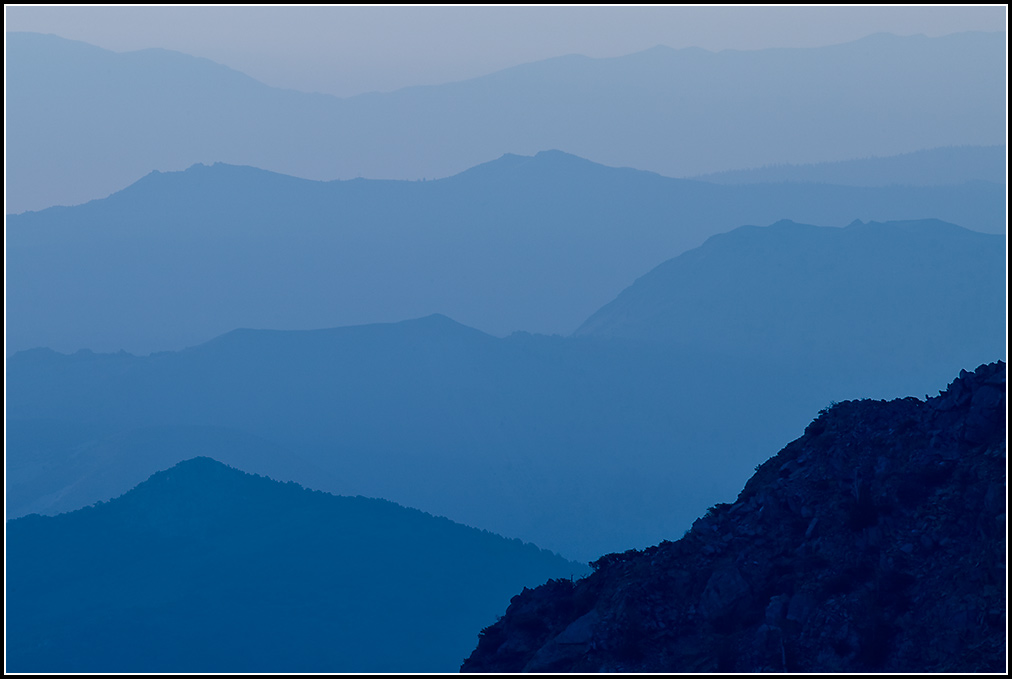
Many photographers think focal length affects perspective. They think wide angle lenses exaggerate perspective, and telescopic lenses flatten perspective.
Technically speaking, that's not true. All focal lengths show perspective identically.
Some of you might be thinking, "But I've seen exaggerated perspective with wide angle lenses and flattened perspective with telescopic lenses". So, what's going on?
Here's the way it's actually working:
In order for a wide angle lens and a telephoto lens to exactly fit a subject of the same size (such as a yardstick fitting exactly across the length of the frame), the wide angle lens needs to be closer to the subject than the telephoto lens. If we wanted to exactly fill the frame with a yardstick, using a 24 mm lens on a 35 mm format camera, we'd need to be about 2 feet away. To similarly fill the frame with a yardstick, using a 600 mm lens, we'd need to be a little over 49 feet away.
Now imagine there's a second yardstick, a blue one, two feet behind the first one, which we'll say is yellow. As you photograph the yellow yardstick with the 24 millimeter lens from 2 feet away, the blue yardstick will be 4 feet away – twice the distance from your lens – which means the blue yardstick will look half as large as the yellow one in your picture. By comparison, when photographed with the 600 millimeter lens, the blue yardstick is 51 feet away – about 4% farther away than the yellow yardstick 49 feet away, which means it will look 2% smaller in your picture.
Thus, while all lenses actually show perspective the same way, the way we use lenses, due to their focal lengths, gives us the appearance of different perspectives. The way wide angle lenses usually get used (comparatively closer to subjects) appears to "exaggerate" perspective; the way telephoto lenses usually get used (comparatively farther from subjects) appears to "compress" perspective.
If you used both the 24 mm lens and the 600 mm lens from 49 feet away, and then cropped the 24 mm picture down to where it covered the same area as the 600 mm picture, then compared the two shots side by side, you'd see that the perspective in the two pictures is identical.
View East of Tioga Pass, Near Yosemite National Park, California
All pictures and text are © Mike Spinak, unless otherwise noted. All pictures shown are available for purchase as fine art prints, and are available for licensed stock use. Telephone: (831) 325-6917.
Tuesday, October 20, 2009
Imagination and Ambition
My blog has moved from Blogger to my own domain.
The Naturography Blog can now be found at http://naturography.com
This blog post can now be found at http://naturography.com/imagination-and-ambition/
Thank you for your interest.
The Naturography Blog can now be found at http://naturography.com
This blog post can now be found at http://naturography.com/imagination-and-ambition/
Thank you for your interest.
Friday, October 16, 2009
The Secret of Stalking Wildlife
My blog has moved from Blogger to my own domain.
The Naturography Blog can now be found at http://naturography.com
This blog post can now be found at http://naturography.com/the-secret-of-stalking-wildlife/
Thank you for your interest.
The Naturography Blog can now be found at http://naturography.com
This blog post can now be found at http://naturography.com/the-secret-of-stalking-wildlife/
Thank you for your interest.
Thursday, October 15, 2009
Mysteries of Nature: Fire and Ice
My blog has moved from Blogger to my own domain.
The Naturography Blog can now be found at http://naturography.com
This blog post can now be found at http://naturography.com/mysteries-of-nature-fire-and-ice/
Thank you for your interest.
The Naturography Blog can now be found at http://naturography.com
This blog post can now be found at http://naturography.com/mysteries-of-nature-fire-and-ice/
Thank you for your interest.
Wednesday, October 14, 2009
The Value of Projects
My blog has moved from Blogger to my own domain.
The Naturography Blog can now be found at http://naturography.com
This blog post can now be found at http://naturography.com/http:/naturography.com/the-value-of-projects/
Thank you for your interest.
The Naturography Blog can now be found at http://naturography.com
This blog post can now be found at http://naturography.com/http:/naturography.com/the-value-of-projects/
Thank you for your interest.
Sunday, October 11, 2009
Answering Some Questions
My blog has moved from Blogger to my own domain.
The Naturography Blog can now be found at http://naturography.com
This blog post can now be found at http://naturography.com/?p=317
Thank you for your interest.
The Naturography Blog can now be found at http://naturography.com
This blog post can now be found at http://naturography.com/?p=317
Thank you for your interest.
Monday, October 5, 2009
Composition Rules Problems, 1
My blog has moved from Blogger to my own domain.
The Naturography Blog can now be found at http://naturography.com
This blog post can now be found at http://naturography.com/?p=293
Thank you for your interest.
The Naturography Blog can now be found at http://naturography.com
This blog post can now be found at http://naturography.com/?p=293
Thank you for your interest.
Sunday, October 4, 2009
Examples of Artistic Communication
My blog has moved from Blogger to my own domain.
The Naturography Blog can now be found at http://naturography.com
This blog post can now be found at http://naturography.com/?p=275
Thank you for your interest.
The Naturography Blog can now be found at http://naturography.com
This blog post can now be found at http://naturography.com/?p=275
Thank you for your interest.
Saturday, October 3, 2009
The Language of Art
My blog has moved from Blogger to my own domain.
The Naturography Blog can now be found at http://naturography.com
This blog post can now be found at http://naturography.com/?p=269
Thank you for your interest.
The Naturography Blog can now be found at http://naturography.com
This blog post can now be found at http://naturography.com/?p=269
Thank you for your interest.
Friday, October 2, 2009
Content, Part 1
My blog has moved from Blogger to my own domain.
The Naturography Blog can now be found at http://naturography.com
This blog post can now be found at http://naturography.com/?p=259
Thank you for your interest.
The Naturography Blog can now be found at http://naturography.com
This blog post can now be found at http://naturography.com/?p=259
Thank you for your interest.
Tuesday, September 29, 2009
A Brief Note About Content and Communication
My blog has moved from Blogger to my own domain.
The Naturography Blog can now be found at http://naturography.com
This blog post can now be found at http://naturography.com/?p=255
Thank you for your interest.
The Naturography Blog can now be found at http://naturography.com
This blog post can now be found at http://naturography.com/?p=255
Thank you for your interest.
Sunday, September 27, 2009
First Light, Mono Lake
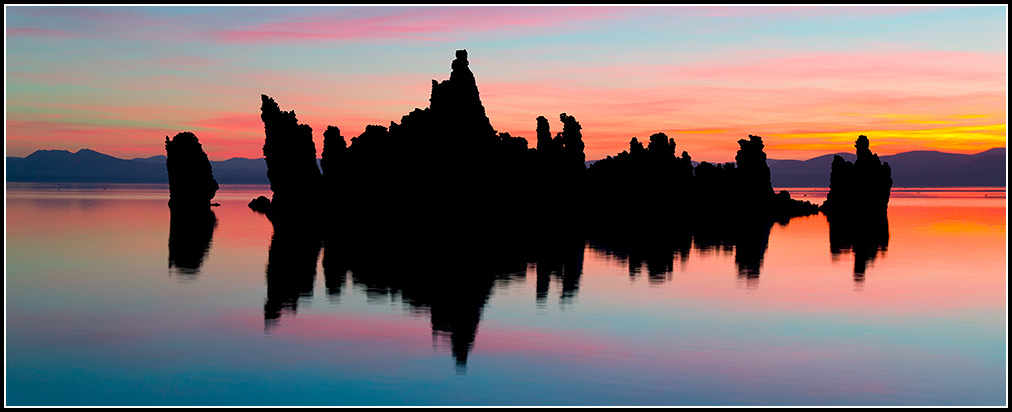
Since telling the story of the picture was well received, with First Snow, Yosemite Valley, here's another – the story of First Light, Mono Lake.
This Picture was taken at exactly 5:00 A.M., in May 2004, with a Canon EOS 1Ds camera and a Canon 24-70 millimeter f/2.8 lens.
I had been traveling along Highway 395 for a week with my friend, Steve, photographing the Eastern Sierras in the late season snow. We arrived at Mono Lake the evening prior to this shot, much later than we had intended. This had been my first visit there since I'd taken up photography, and we only had about 10 minutes to reconnoiter the area before dark, to plan for our dawn shot the following morning. I rushed around the South Tufa area in those last few minutes of light, compass in hand to keep track of precisely where the sun would rise.
I found and chose this spot, then left to return in the early morning. It didn't look like much in the pale post-sunset waning light. The formation was spectacular, but it was not complimented by the flat light which made it blend into its surroundings; and the choppy water obscured all traces of reflection. Nonetheless – compass in hand, I envisioned it darkly backlit and sharply contrasting with the bright surrounding water, reflecting the morning sunlight; and I envisioned better reflections as long exposures in the dim early morning smoothed the water's chop.
I wanted it to stand out in stark isolation. I wanted the picture to convey how fantastic and other-worldly this structure is. I wanted the break of day upon these tufa towers to express a sense of the primordial.
I rarely choose to shoot toward the sun on the horizon. The light is usually more interesting facing the direct opposite direction, or a sidelong direction. Further, silhouetted shapes usually have to be very engaging, indeed, for silhouette photos to work. In this case, however, the shape of the tufa formation was certainly strong enough.
When I showed up at the spot during the beginning of morning twilight, I didn't think the conditions looked very promising. I had hoped for more clouds in the sky, perhaps with a nicely detailed pattern, to reflect the colors of the rising sun's light. Nevertheless, I set up my composition according to my plan from the previous evening, and hoped for the best.
In the last few minutes before the sun's first appearance, the few wisps of cloud on the edge of the horizon thickened and drifted closer, greatly improving the photographic potential. As the light developed while I waited for the peak moment, it became clear that the never-the-same-twice light variables of dawn's light were presenting me with a significant photographic opportunity. The character of this dawn's light had three qualities that I found exceptional, and wanted to incorporate into my picture: First, it separated each element of the scene clearly from the other elements, while showing each element as a simplified and very coherent form. Second, it had numerous distinct bars of color and tone, each on top of the next, extending in horizontal strips across the sky. Third, it had every color of the rainbow visible, but in an unusual, un-rainbow-like pattern.
I made some quick compositional readjustments in order to optimally work with these special lighting characteristics, toward my desired expressive ends, and, in excited anticipation, took the shot.
Thanks for reading this.
First Light, Mono Lake
All pictures and text are © Mike Spinak, unless otherwise noted. All pictures shown are available for purchase as fine art prints, and are available for licensed stock use. Telephone: (831) 325-6917.
Saturday, September 26, 2009
First Snow, Yosemite Valley

It's been suggested that readers would enjoy hearing the stories behind the pictures. So, here's the story behind my picture, First Snow, Yosemite Valley.
In Autumn of 2003, I came to Yosemite Valley to photograph the Fall foliage and then the ice formations at the start of Winter. At first, the weather was unseasonably warm and dry. The daytime temperatures were in the upper 80s Fahrenheit, and even the overnight lows were warm enough for comfortably walking around without a jacket. The earth was parched, and the sky was thick with the yellow haze of dust and campfire smoke.
Then, on the evening of Halloween, the weather changed in an instant. The haze disappeared, a chill wind blew, and billowing clouds, rose colored in the day's last rays, piled up high on the edge of the sky. The next morning, the world was white with an eight inch thick cover of snow.
I was out photographing before dawn, excited to shoot as much as possible, before it all melted and disappeared. (In patches, it had melted entirely by mid-afternoon.) I chose to take a picture which emphasized the meadow's leaning grasses, laden with sticky, granular snow, because this shows the unique character of a first snowfall of Autumn. The snow would melt away, then fall anew, several times more, before it finally heaped into a blanket that remained for the season – but the grasses would already be entirely crushed flat before the next snow fell, irreversibly changed until next year's new growth. In this way, the picture shows a brief slice of time, and hints at the many special ways that only the first snowfall transforms the land.
While towering granite cliffs are iconic of the Yosemite Valley, they are mostly excluded from the picture, to focus on a more intimate sense of the changing of the seasons. After a little while waiting for the fog to rise a bit, the rising fog outlined the trees and obscured the granite valley walls, and gave a sense of the seasonal weather and evanescence.
Photographed with a Canon EOS 1Ds, and a Canon 24-70 mm f/2.8 lens.
If you enjoy reading the stories behind the pictures, and would like more, please let me know. If you'd rather I stick to other topics, instead, I'd like to hear that, too.
Thank you, Rhonda Harrison Cole, for suggesting posting about the stories behind the pictures.
First Snow, Yosemite Valley
All pictures and text are © Mike Spinak, unless otherwise noted. All pictures shown are available for purchase as fine art prints, and are available for licensed stock use. Telephone: (831) 325-6917.
Thursday, September 24, 2009
The Perils of Nature Photography
My blog has moved from Blogger to my own domain.
The Naturography Blog can now be found at http://naturography.com
This blog post can now be found at http://naturography.com/?p=234
Thank you for your interest.
The Naturography Blog can now be found at http://naturography.com
This blog post can now be found at http://naturography.com/?p=234
Thank you for your interest.
Subscribe to:
Posts (Atom)
